



























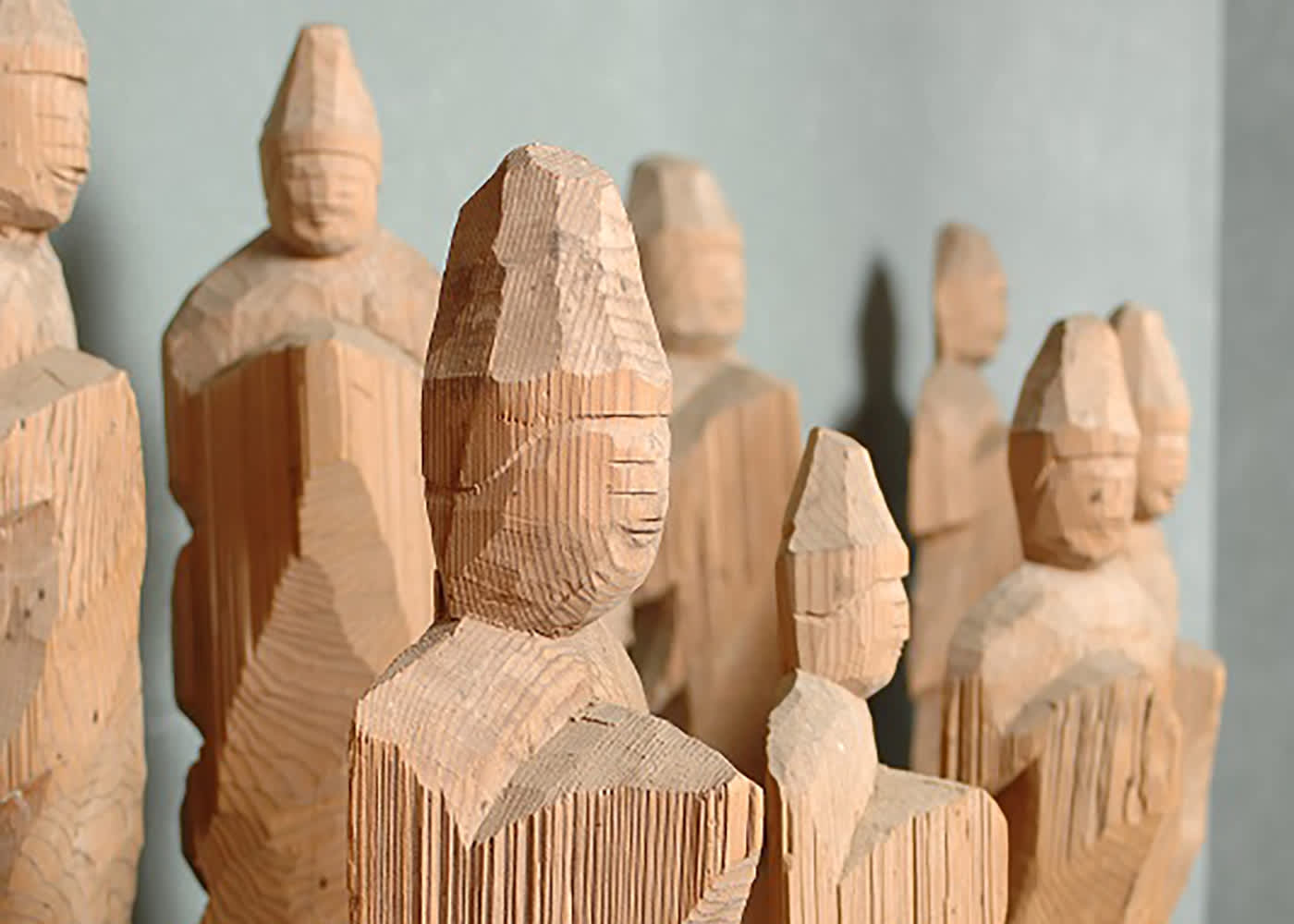
Enku was a 17th-century wandering monk who carved tens of thousands of wooden Buddhist figures as he traveled across Japan. His powerfully evocative works are characterized by unadorned, rough-hewn surfaces and uncomplicated forms, revealing the heart of an artist driven by devotion rather than a quest for aesthetic perfection. Today, groups of these statues are preserved throughout Gifu Prefecture, including at Senkoji Temple and Minami Furusato-kan.
Enku’s Life on the Move

Born in Mino Province (modern-day Gifu Prefecture) in 1632, Enku was an itinerant mountain ascetic who left behind a treasure trove of carved Buddhist statues. Wherever he stopped, he used local timber to quickly craft figures, on which he left visible tool marks, knots in the wood, and other apparent imperfections. But his statues were anything but imperfect. The unpainted rough surfaces and minimal finishings created a kind of raw art that has an immediate and powerful impact. Each mark made by Enku is like a piece of his soul encased in wood, and his figures enchant spiritual tourists who come from far and wide to observe his life’s work.

Standing Thirty-Three Kannon, Senkoji Temple
Enku’s output was as vast as it was poignant and minimally complex, including depictions of Buddhas and bodhisattvas, Kannon (the goddess of mercy), and more, depending on the local devotional needs at the time. It is said that Enku set out to carve 120,000 statues—5,000 survive today, with 1,600 of those in Gifu.
Enku’s Buddhas are also important educational tools, showing how religious practices and folk art intersected in pre-modern Japan. Because the statues were carved at points along pilgrimage routes, including local shrines and village temples, each of them carries the marks of its original location. The woodgrain and bark tell different stories of local Japanese materials and craftsmanship from hundreds of years ago, placing the statues at the intersection of history, culture, and faith.
Reading the Wood at Senkoji
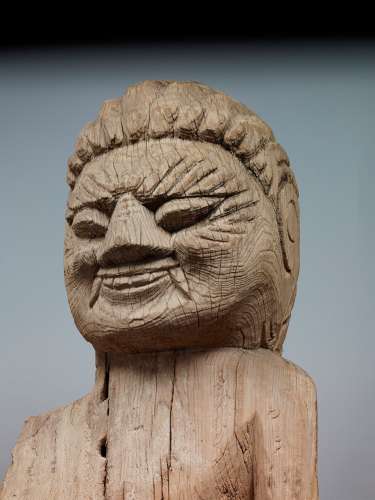
Standing Nio, Senkoji Temple
Hida Takayama’s Senkoji is a must-see for all spiritual tourists interested in Enku. The temple’s Enku Buddha Treasure House displays 64 statues created by the traveling monk, including notable pieces like the Standing Nio and the statue of Ryomen Sukuna, identified in various sources as a powerful warrior or demon. Senkoji also preserves other treasures related to Enku, such as his portrait and a copy of his poetry collection, all of which help visitors to understand Enku the person, not just Enku the sculptor.
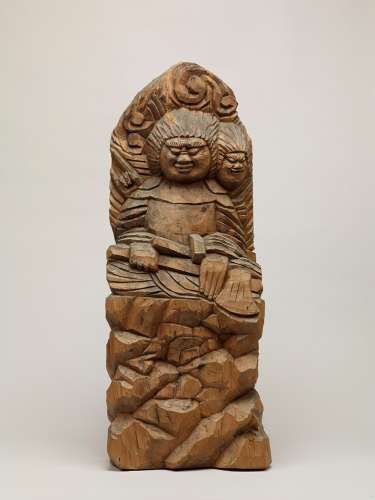
Statue of Ryomen Sukuna, Senkoji Temple
The Senkoji Temple’s collection showcases the steady evolution of Enku’s style through the years. Up close, the visitor’s eye is drawn to the unvarnished wood and grain, the prominent tool marks that reveal Enku’s process (fast, determined, and singularly focused), and the statue’s expression. The simply carved eyes and mouth surprisingly convey a wide range of emotions—perhaps even reflecting the viewer’s own state of mind. Even if they weren’t of a religious nature, Enku’s Buddha figures would still have a mystical aura about them.
Senkoji Temple
Before You Start Your Pilgrimage
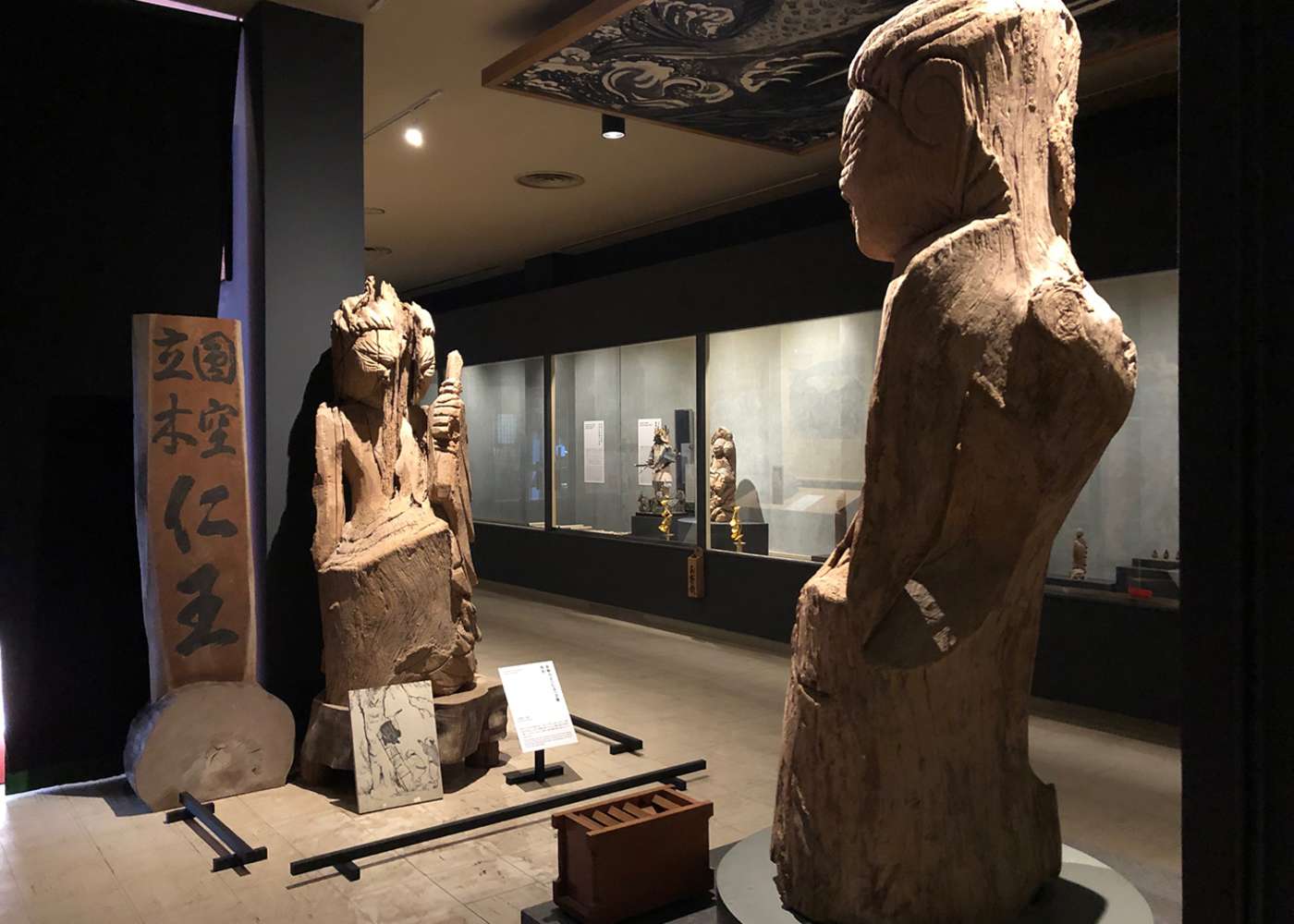
Another important center in Gifu for Enku-related spiritual tourism is Minami Furusato-kan in Gujo, Gifu Prefecture , which houses 90 Enku statues and the monk’s letters, talismans, and handwritten copies of sutras. A local sculptor-guide is sometimes available on-site to talk about Enku’s carving methods and how his works changed over time. Please note that guided sessions require a reservation.
Minami Furusato-kan
Access to Enku’s works varies throughout Gifu. Some temple displays are only open on specific dates—for example, in 2025, Senkoji’s statues were only available for viewing from April 19 to November 30. Additionally, while enjoying Enku’s Buddhas, please respect local rules and regulations regarding photography. Also be aware that some museum exhibits include faithfully carved copies of statues when the originals are too fragile to display. Some originals may also be out on loan to other museums.
Learning about Enku before your visit will surely help you get the most out of an encounter with the monk’s Buddhas, which reward slow, careful attention. The longer you look, the more they will tell you.
Related Links:
Hida Folk Village Open-Air Museum
Senkoji Temple
Minami Furusato-kan
Recommended For You


-
About the author
Author : Cezary Jan Strusiewicz
Cezary Jan Strusiewicz is a writer and translator living in Yokohama. His areas of expertise include feudal Japanese history, Japanese pop culture, and regional Japanese tourism. You can find his work in various domestic and international publications.

